

An embedded system is an electronic system that can be programmed or non-programmed to operate, organize and perform single or multiple tasks based on the application. In the real time embedded systems, all the assembled units work together based on the program or set of rules or code embedded into the micro controller. By using embedded system technology the complexity of the circuits can be reduced to a great extent which further reduces the cost and size. We offer complex design and firmware services in embedded field.

Schematic diagram is a logical and graphical representation of an electrical circuit. It is the very first step of electronic product design and is one of the important aspects of PCB design. A good schematic shows a well structured circuit diagram clearly depicting the electrical connections between various electronic components. Schematics shows the components and interconnects of each other which can be used for PCB design.
PCB is a physical representation of schematics circuit. PCB Design is a technique to build a electronics device on which the real electronics component can be assembled and the functionality of the device can be tested. It represent the physical interconnects of device with copper traces in one or several layers. We offer complex design PCB services.

3D modeling or CAD (Computer Aided Design) allows engineers and designers to build realistic computer models of parts and whole assemblies. These models can be then 3D Printed or CNC machined as well as used to run complex simulations. Solid modeling creates solid 3D models as if they are actual parts, with a logical workflow which is similar to the processes which would be used to manufacture the part. Solid models can intersect, join and subtract objects from one another to create the desired part.
Assembly modeling is also an important stage in solid modeling, allowing individual parts to be assembled together, forming complex models. Assemblies can be used to insert standard components that have been downloaded directly from the manufacturers. Motion elements can also be applied to assemblies, allowing detailed motion analysis to be used to evaluate the mechanical performance of the design. We offer complex 3D design services.
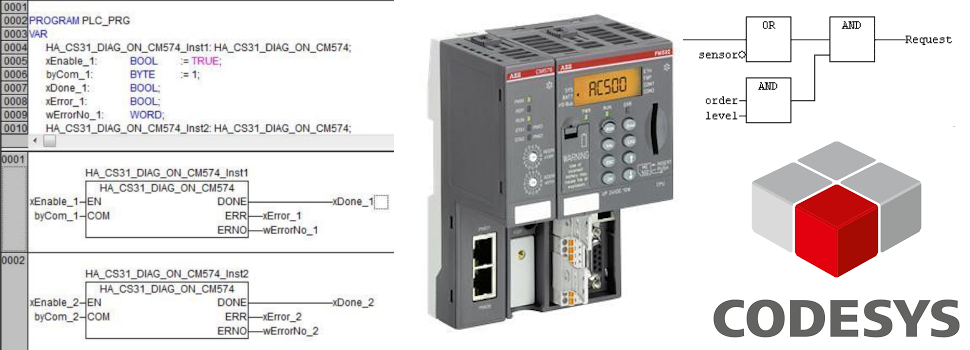
A programmable logic controller (PLC) or programmable controller is an industrial computer that has been ruggedized and adapted for the control of manufacturing processes, such as assembly lines, machines, robotic devices, or any activity that requires high reliability, ease of programming, and process fault diagnosis. PLCs can range from small modular devices with tens of inputs and outputs (I/O), in a housing integral with the processor, to large rack-mounted modular devices with thousands of I/O, and which are often networked to other PLC and SCADA systems
IEC 61131-3 is the open international standard IEC 61131 for programmable logic controllers and was first published in December 1993 by the IEC. The current (third) edition was published in February 2013. Part 3 of IEC 61131 deals with basic software architecture and programming languages of the control program within PLC. It defines three graphical and two textual programming language standards. CodeSys is a development environment for programming controller applications according to the IEC 61131-3 inindustrial standard. The main poduct of the software suite is the CODESYS Development System - an IEC 61131-3 tool. We offer complex design and programming services in CodeSys environment.
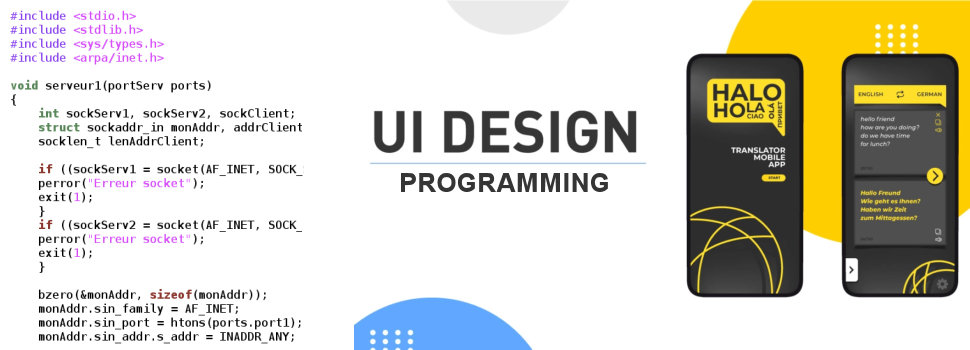
A HMI/SCADA is a category of software-based control system architecture that uses networked data to provide operators with a graphical user interface that allows them to monitor the performance of many pieces of equipment and issue process commands and settings. This can be accomplished from a dedicated screen, mobile device, or any PC connected to the control network. browser.
The graphical user interface (GUI) is a form of user interface that allows users to interact with electronic devices through graphical icons and audio indicator. The actions in a GUI are usually performed through direct manipulation of the graphical elements. Beyond computers, GUIs are used in many handheld mobile devices such as MP3 players, portable media players, gaming devices, smartphones and smaller household, office and industrial controls. We offer complex design and programming services for GUI/HMI implemantation in particular system.